
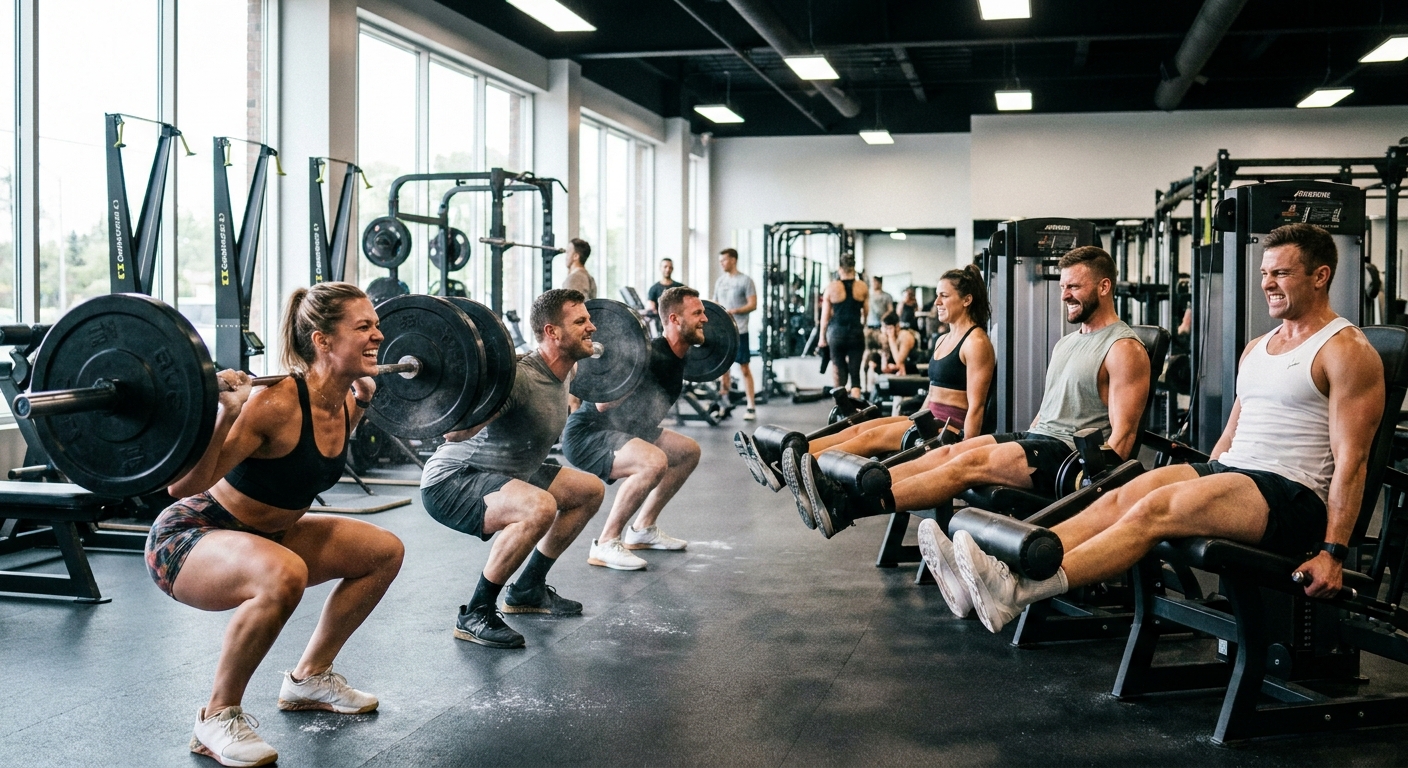
 Unveiling the Secrets of the Gym
 - Squats are often hailed as the king of exercises due to their ability to stimulate a large volume of musculature, from the posterior chain to the quadriceps.
- The leg extension, on the other hand, is both criticized and praised for its specific focus on the quadriceps, offering muscle isolation that few other exercises can match.
- The squat is a compound exercise, engaging many muscle groups simultaneously, including the quadriceps, glutes, hamstrings, and to a lesser extent, the core and back. The complete and complex movement of the squat stimulates a vast muscle area, promotes coordination, and stimulates the production of anabolic hormones.
- The leg extension, on the other hand, is an isolation exercise, focusing primarily on the quadriceps. While it intensely targets this muscle group, it doesn't stimulate the rest of the body to the same extent.
- Squats promote an increase in anabolic hormones, essential for broader-scale muscle growth.
- Leg extensions facilitate localized hypertrophy of the quadriceps due to their ability to isolate and overload this specific muscle.
- As a compound exercise, squats improve neural connections and the ability to execute complex movements, which is vital for functional strength.
- The leg extension, by increasing specific quadriceps strength, can enhance performance in activities requiring intense leg pushes, such as cycling or soccer. However, it doesn't significantly contribute to overall strength or the functionality of other muscle groups.
- Beginners: 3 sets of 8-10 reps with a weight you can handle without compromising your form.
- Intermediate: 4 sets of 8 reps with a progressive weight increase.
- Advanced: 5 sets of 5 reps, trying to gradually increase the weight in each session.
- Beginners: 3 sets of 12-15 reps with a light weight, focusing on proper execution.
- Intermediate: 4 sets of 10-12 reps with a moderate weight, maintaining the right time under tension.
- Advanced: 5 sets of 8-10 reps, with enough weight to work the muscles to the maximum without sacrificing form.
- Keep workouts varied: don't focus on just one exercise. Diversifying stimulates muscle growth.
- Monitor progress: keep a workout journal to see your improvements.
- Focus on nutrition: a balanced diet supports both recovery and muscle growth.
- Squats engage more muscle groups and are better for overall hypertrophy
- Greater overall strength increase with squats compared to leg extensions
- Combination of squats and leg extensions for optimal muscle balance