If this is your first visit, be sure to
check out the FAQ by clicking the
link above. You may have to register
before you can post: click the register link above to proceed. To start viewing messages,
select the forum that you want to visit from the selection below.
Leg Press vs Squat: Which Exercise Strengthens Your Legs More?
Leg Press vs Squat: Which Exercise Strengthens Your Legs More?
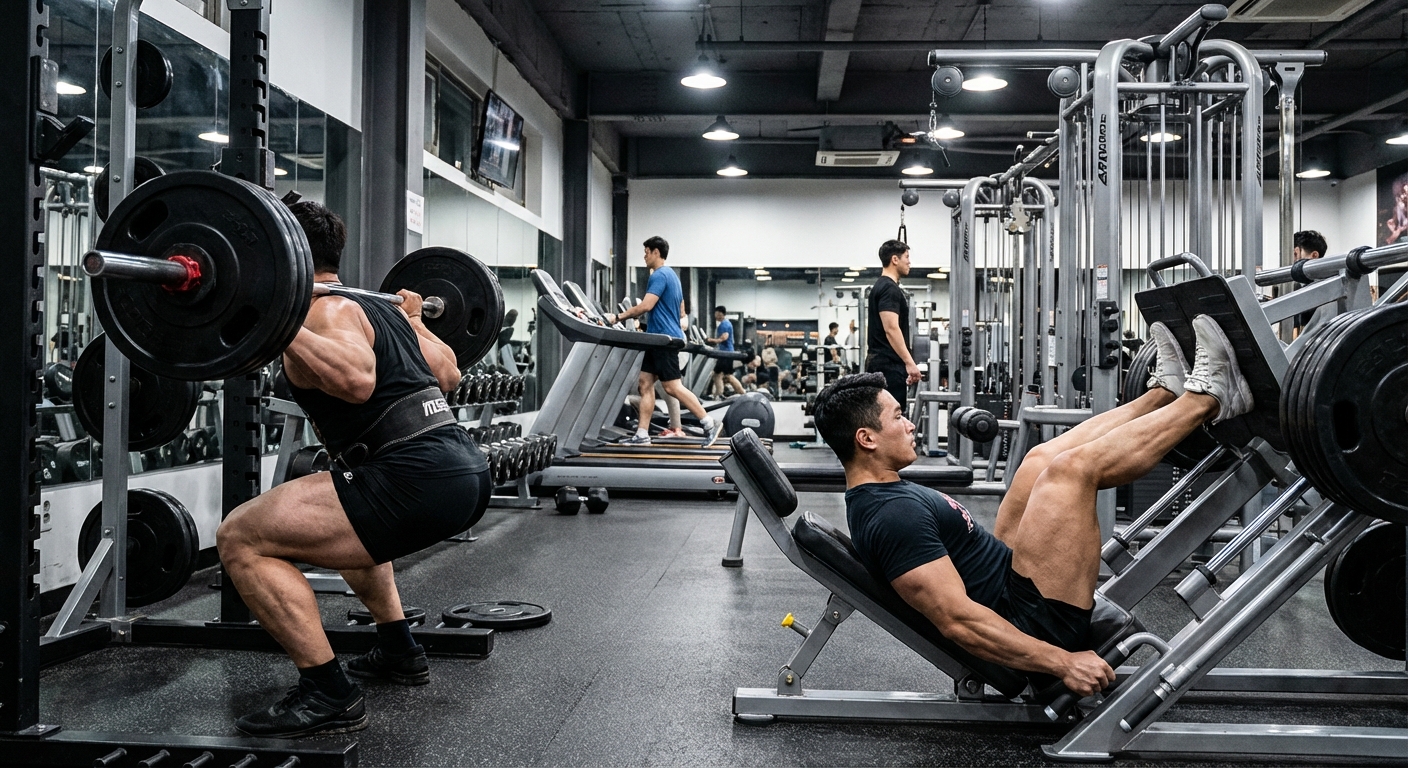
Squat vs Leg Press: Let's Bust Some Myths In the fitness world, there are many myths and legends, and when it comes to strengthening the legs, the age-old debate between squat and leg press inevitably arises. If you're a fitness enthusiast or just someone looking to improve leg strength, you've surely heard heated discussions about which exercise is more effective. But what does science really say? And what are the false myths we need to debunk once and for all? The Appeal of the Squat Squats are often considered the king of exercises. They not only engage a wide range of muscle groups, including the quadriceps, hamstrings, and glutes, but are also a functional exercise that improves posture and balance. However, many avoid squats due to unfounded fears of potential knee or back injuries. It's time to put these concerns aside, because with the right technique, squats can be a formidable ally. The Convenience of the Leg Press On the other hand, the leg press is loved for its simplicity and accessibility. Seated comfortably, you feel safe while pushing a considerable load, primarily working the quadriceps. But how many believe the leg press is inferior to the squat? In truth, both exercises have their merits and can be effectively incorporated into a balanced workout program. List of Common Myths to Debunk
Squats damage the knees
The leg press is useless for overall strength
Only squats build muscles
Experts tell us that when executed correctly, both squats and the leg press can significantly contribute to strengthening the legs. So rather than focusing on which is better, it's important to understand how both can be used effectively to meet your fitness goals. Keep reading our full article for a detailed overview and to finally bust these myths! Introduction In the fitness world, two of the most discussed exercises for strengthening the lower limbs are the leg press and the squat. Both are effective, but which one is more suited to meet specific training objectives? Let's take a close look at the biomechanics and muscle activation patterns involved in these two activities, highlighting the differences in muscle groups involved and the load distribution during exercises. Squat Biomechanics Squats are a complex exercise that involves various muscle groups throughout the body. The main muscles involved are:
The quadriceps (the front thigh muscles)
The glutes
The hamstrings (back of the thigh)
The abdominal and back muscles for trunk stabilization
The biomechanics of a squat involve a three-dimensional movement that forces the body to maintain balance and coordination, requiring the simultaneous use of various muscle groups. This makes squats a fundamental exercise not only for strengthening lower muscles but also for improving posture and overall joint mobility. Leg Press Biomechanics Unlike squats, the leg press occurs in a more controlled environment, using a machine that guides the movement of the feet on a fixed path. The main muscles targeted by the leg press include primarily:
The quadriceps
The glutes to a lesser extent compared to squats
The hamstrings, though with more limited involvement
The guided nature of the exercise means there's less risk of injury due to poor form, and the machine allows for better isolation of the quadriceps, making the leg press particularly useful for intense focus on this muscle group. Differences in Load Distribution Load distribution during squats and the leg press varies significantly, directly influencing which exercise might be more effective depending on training goals:
In a squat, the load is distributed along the entire body. This increases the intensity of the exercise and stimulates a more significant hormonal response, which can aid in overall muscle growth.
In the leg press, the load is isolated mainly on the legs. This allows you to use heavier weights and focus on strengthening the leg muscles without straining the back or shoulders.
Muscle Activation The intensity of muscle activation also varies between the two exercises:
Squats activate muscles more completely and evenly. This is essential for developing functional strength that improves not just athletic performance but also daily activities.
The leg press, while isolating and intensely activating the quadriceps, does not offer the same level of overall muscle activation, making it less functional outside the specific training context.
Conclusion The choice between squats and the leg press should depend on the user's specific goals and physical condition. For those seeking a workout that improves overall strength and functionality, squats are unparalleled. For those needing to intensely work on the quadriceps, perhaps after an injury, or for those with back issues that make squats challenging, the leg press is a valid alternative. Ultimately, both exercises have their place in a well-rounded training regime. Leg Press vs Squat: Which Exercise Strengthens Your Legs More? The eternal question in the bodybuilding world: leg press or squat? Both exercises are fundamental for strengthening and developing the legs, but they offer different experiences and benefits. Let's take a look at the differences and find out which one suits your training plan better. Benefits of the Leg Press The leg press is an excellent exercise for isolating the leg muscles without overly involving the trunk. It's ideal for those who want to focus solely on quadriceps, glutes, and calves. Thanks to the machine, pressure on the spine is minimal, making it a preferred choice for those with back or joint issues. Advantages of Squats On the other hand, squats are considered the king of lower body exercises. They involve not only the legs but also the core, improving balance and stability. Squats require excellent technique, and when performed correctly, they help develop functional strength that also reflects in daily activities. How to Choose Between Leg Press and Squats The choice between leg press and squats depends on several factors such as personal goals, experience level, and any physical limitations. In general, for beginners, it's advisable to start with the leg press to build strength and confidence before moving on to squats, which require more technique. Weekly Training Program Here's a balanced proposal that incorporates both exercises, suitable for different fitness levels.
Monday (Beginner) - Warm-up: 10 minutes on a stationary bike - Leg Press: 3 sets x 12 reps - Leg Extensions: 3 sets x 15 reps - Abdominal Crunches: 3 sets x 20 reps
Wednesday (Intermediate) - Warm-up: 5 minutes of jump rope - Squats: 4 sets x 10 reps - Leg Curl: 3 sets x 12 reps - Plank: 3 sets of 30 seconds
Friday (Advanced) - Warm-up: 5 minutes of light jogging - Barbell Squats: 5 sets x 8 reps - Leg Press: 4 sets x 10 reps - Dumbbell Lunges: 3 sets x 12 reps per leg
Tips for Maximizing Results To get the most out of your workouts, pay close attention to proper form during each exercise. Consider working with a coach to improve your technique, especially for squats. Don't forget the importance of nutrition: a balanced diet rich in proteins, complex carbs, and healthy fats supports muscle growth. Conclusions Ultimately, both the leg press and squats play crucial roles in your training. Alternating these exercises periodically in your program can lead to balanced leg development and prevent boredom, keeping motivation high. Remember, the key is consistency and dedication! What are the Safety Considerations When Choosing Between Leg Press and Squats? When deciding between leg press and squats, safety is essential. Squats require good mastery of technique, especially to avoid overloading the back and knees. It's important to keep the back straight and control the movement. The leg press, though less complex technically, can cause problems if the back is arched under stress. Make sure to adjust the seat correctly to avoid unnecessary tension. How Do Muscle Activation Patterns Differ Between Squats and Leg Press? The muscle activation patterns vary significantly between these two exercises. Squats are known for recruiting a wide range of muscles, involving not just the quadriceps but also the glutes, hamstrings, and core muscles. By contrast, the leg press focuses primarily on the quadriceps and, to a lesser degree, the glutes. If you're looking for a wider muscle distribution, squats are often preferred. Can Squats and Leg Press Be Combined Effectively in a Training Program? Absolutely! Combining squats and leg press can be an effective strategy for complete muscle development. You can integrate both exercises on leg day, maybe starting with squats to activate the core and then moving on to leg press for a more targeted focus on the quadriceps. Keep a good variety to avoid adaptation and maximize results. What Are Common Mistakes to Avoid in Both Squats and Leg Press to Prevent Injuries? To prevent injuries, there are several common mistakes to avoid. During squats, be careful not to lift your heels off the ground and not to let your knees collapse inward. It's essential to perform the movement in a controlled manner and to the depth that your flexibility allows. As for the leg press, avoid fully extending the knees at the end of the movement to avoid unnecessary joint stress. Keep your back flat against the seat to prevent injuries.
We process personal data about users of our site, through the use of cookies and other technologies, to deliver our services, personalize advertising, and to analyze site activity. We may share certain information about our users with our advertising and analytics partners. For additional details, refer to our Privacy Policy.
By clicking "I AGREE" below, you agree to our Privacy Policy and our personal data processing and cookie practices as described therein. You also acknowledge that this forum may be hosted outside your country and you consent to the collection, storage, and processing of your data in the country where this forum is hosted.

 Squat vs Leg Press: Let's Bust Some Myths